La Mesa / CA

Asbestos floor tile and mastic removal in La Mesa, CA

La Mesa Asbestos Removal clears old resilient floors in La Mesa, CA kitchens, baths, hallways and slab rooms before new flooring goes down, covering both asbestos floor tile removal and the black adhesive beneath, known as asbestos mastic removal. For 9x9 asbestos tile removal, the size is a clue to age: those 9-inch squares were used in mid-century houses. Each layer is tested on its own, and the removal plan follows those results.

Sheet vinyl and linoleum backings are part of the same work. Our flooring removal covers La Mesa and surrounding communities, including Lemon Grove and Santee.

Request a flooring removal quote
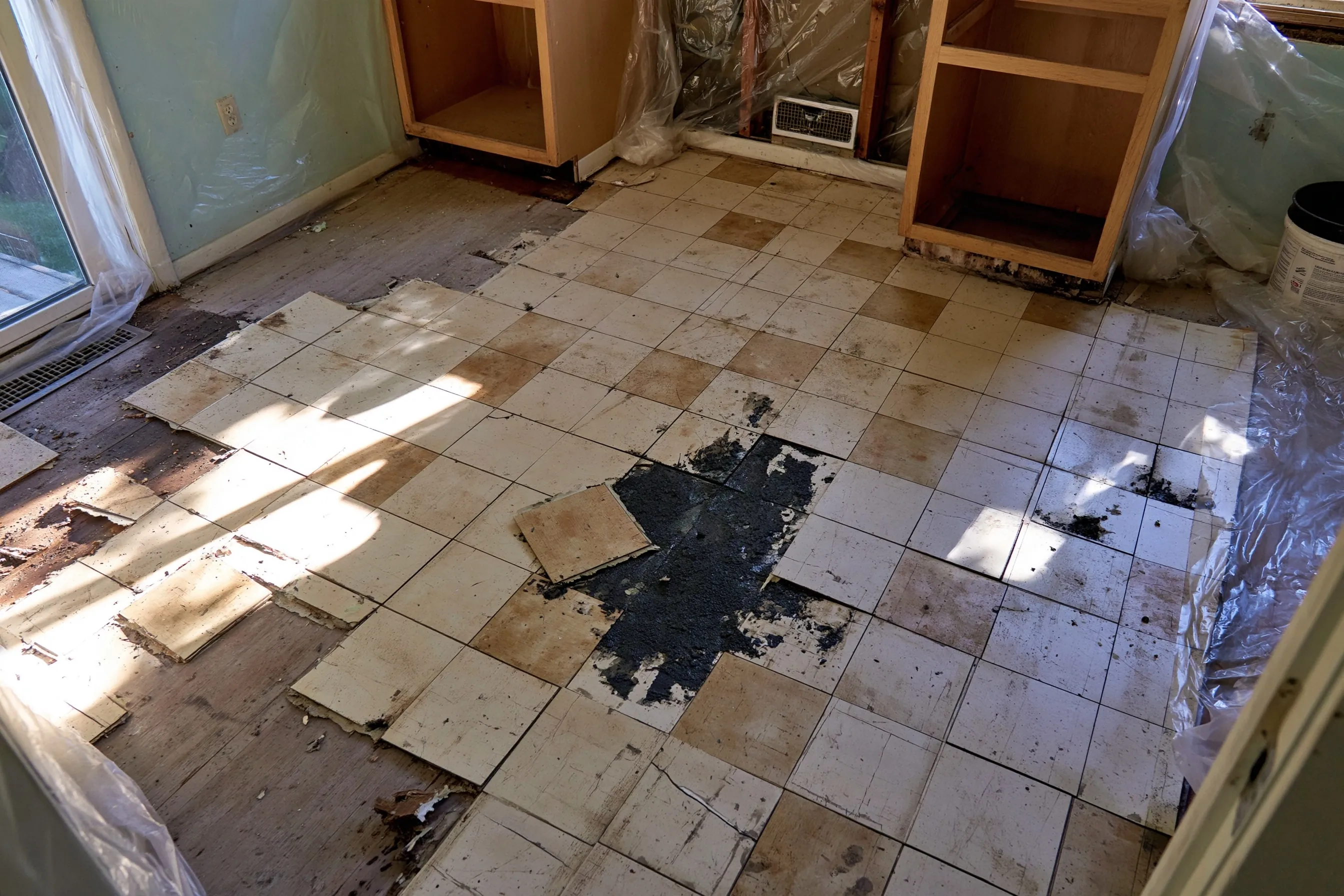
9-inch vinyl asbestos floor tiles and black mastic partly exposed in an older kitchen

Asbestos floor tile and mastic removal options in La Mesa

9-inch and 12-inch vinyl floor tiles

A 9-by-9 tile suggests an older floor, but neither 9-inch nor 12-inch size proves anything on its own; only a lab result does. Rule 1206 lists resilient floor coverings as Category I nonfriable material when they cannot be crumbled by hand. Lifting whole tiles with wet methods keeps them that way; sanding, grinding or pulverizing them is what turns a manageable floor into a dust problem.

Black mastic and flooring adhesive

The adhesive is a separate material with its own sample. If it tests positive, the question is how clean the slab or subfloor must be for what comes next: some floating floors and underlayments can go over residue, while glue-down planks and some tile setters may want bare concrete or new plywood. We confirm that standard with your installer before pricing removal.

Felt backing under sheet vinyl and linoleum

Older sheet flooring can have a felt or paper backing that tears when pulled. EPA lists sheet flooring backing among the materials that can contain asbestos, and torn backing can crumble in a way intact tile does not. That is why sheet goods are scoped separately from tile, with more wetting and different waste handling.

Layered floors in older kitchens and baths

A kitchen redone in the 1970s and again in the 1990s may have three floors, plus plywood screwed over one of them. Each layer is sampled where the remodel will remove it. Sometimes the best plan is to take up only the top floors and leave a sound, tested asbestos layer covered; sometimes the new layout means everything comes out down to the slab.

Agree the floor condition the next trade receives

One point to settle on any flooring job is what "removed" means. Before work starts we write down whether the finished surface will be bare slab, slab with thin adhesive residue, or subfloor ready for new underlayment, and which rooms are included. That written handover point is what your flooring installer needs to see.

How the waste is classified follows from how it comes up. Under DTSC rules, crumbly material at 1% asbestos or above is hazardous waste, whereas whole, unbroken tile does not fall under the department’s hazardous waste regulations at all, although landfills attach their own acceptance terms. Lifting tile intact keeps both the dust and the disposal bill down.

Tearing a kitchen or bath back to the studs means the backsplash, the wall texture, the soffit over the cabinets and the pipes behind the vanity all come into play, and surveying an entire room is explained under asbestos abatement before renovation and demolition. La Mesa Asbestos Removal covers the remaining materials on its homepage.

Your next step

Send us your flooring project

Share which rooms are involved, an approximate square footage, how many floor layers show at a heat register or threshold, and the new flooring you have chosen. A slab foundation or a raised wood subfloor changes the surface we hand back, so mention which one the house has. We'll get back to you soon with an estimate or any questions we have. Estimates are free and there's no obligation.

Call (619) 639-0343

Call (619) 639-0343