Lemon Grove / CA

Asbestos removal in Lemon Grove, CA

La Mesa Asbestos Removal works across the city line in Lemon Grove, CA, removing and abating asbestos in popcorn and acoustic ceilings, vinyl floor tile and mastic, HVAC ducts and insulation, wall board and plaster, and exterior stucco. Homeowners come first, followed by the owners of the city’s small apartment buildings and storefronts, and every job starts with lab results on the materials you plan to disturb.

Lemon Grove borders La Mesa to the south, about 3.3 miles by road from center to center. It is a small, compact city of roughly 27,700 people on 3.9 square miles, and its housing is old: the Census Bureau’s 2024 five-year estimates put 71.8% of homes before 1980 and the median build year at 1969. The largest single group of houses dates from the 1950s, after the citrus groves that gave the city its name had given way to suburbs.

Request an asbestos removal quote
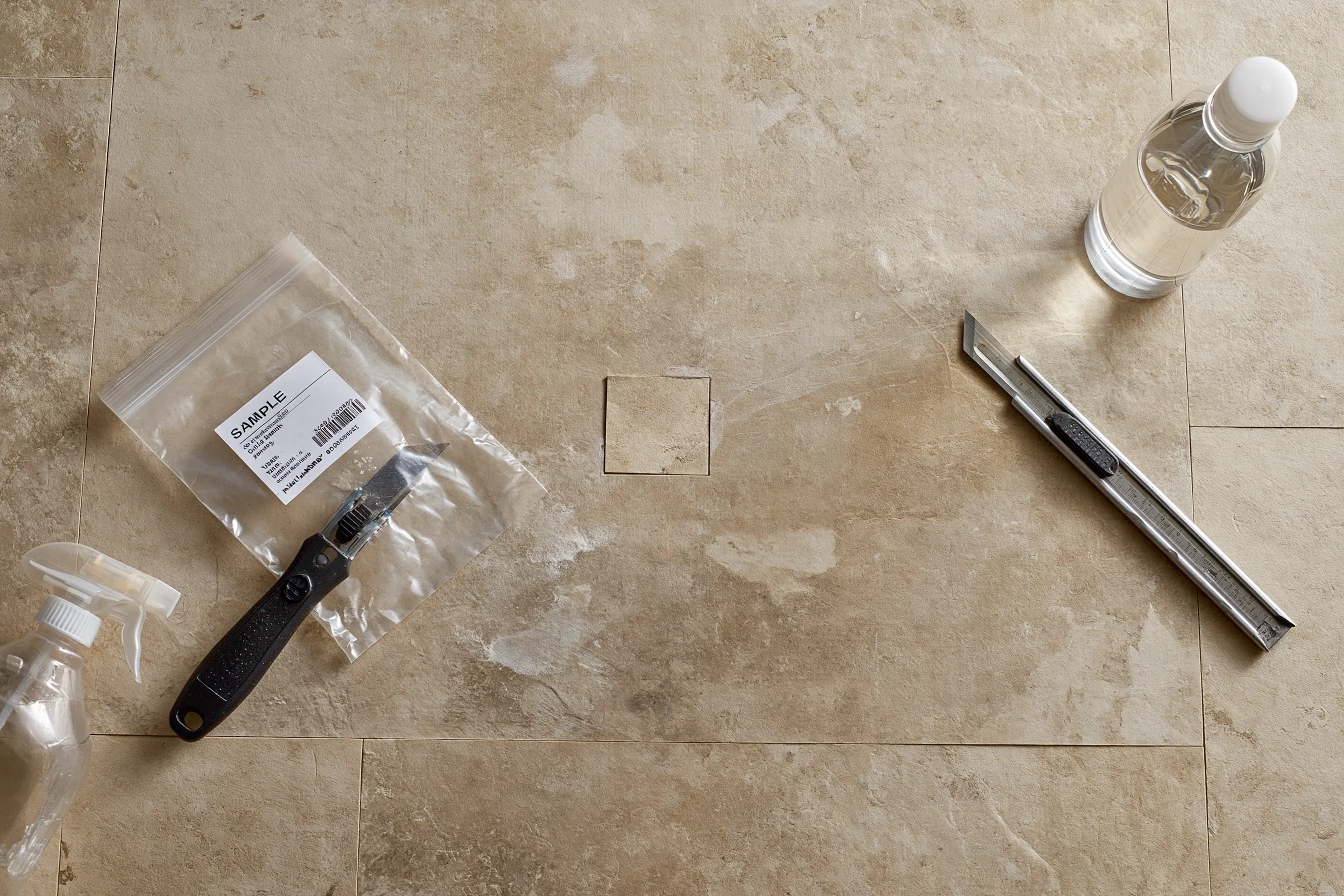
Labeled sample bags and a sampling tool beside a small cut in flooring

Asbestos removal for Lemon Grove ceilings, floors, walls and buildings

Asbestos popcorn ceiling removal

A 1950s or 1960s house in Lemon Grove may have had its ceilings sprayed with acoustic texture during a later update, so the original build year alone does not settle the question. We sample the coating and the board separately in each room you plan to change. Popcorn ceiling removal can then be limited to the rooms that tested positive, or extended through the house if you are refinishing every ceiling anyway.

Asbestos floor tile and mastic removal

Kitchens and baths in the city’s mid-century houses can carry several floors, sometimes with plywood between them. Tile, adhesive and any sheet vinyl backing are tested layer by layer. Floor tile and mastic removal is planned around the finish your installer needs, whether that is a bare slab or a clean subfloor, and whole tiles are lifted wet so they stay nonfriable.

Asbestos HVAC duct and insulation removal

With homes this age, much of the original ductwork is still in attics and crawlspaces, wrapped in insulation and sealed with fibrous tape. A new furnace or a first central air system disturbs all of it. Duct and insulation removal is sequenced before the HVAC contractor arrives, and pipe insulation in garages is presumed to contain asbestos under Cal/OSHA until a lab says otherwise.

Asbestos drywall, joint compound and plaster removal

Lemon Grove still has about 1,200 homes from before 1950, a period when plaster walls were still built, while later houses use drywall with taped seams. Either can contain asbestos, and the joint compound can test differently from the board. Drywall and plaster removal is sized to the openings in your plans, from small holes for rewiring to whole rooms.

Asbestos stucco removal

On a stucco ranch house, an addition may have been finished in a different mix years later. Each layer gets its own sample. Stucco removal around replacement windows, new doors or a full re-stucco is done with the area sealed and the debris kept damp, an important point on lots where the next house is only a few feet away.

Apartment and commercial asbestos abatement

Census estimates place close to 1,960 Lemon Grove homes in complexes of five units or larger. Every one of those complexes, and every shop or office along the city’s commercial streets, is a facility under Rule 1206. Apartment and commercial abatement there therefore begins with a written survey by someone holding current EPA-approved inspector training, then an APCD filing no later than 10 working days ahead of removal.

Asbestos abatement before renovation and demolition

A kitchen remodel, an added bedroom or a full teardown touches several materials at once, so the survey should follow the drawings. Renovation and demolition abatement removes whatever the plans will disturb before the builder starts, and in covered buildings the APCD requires a demolition notification whether asbestos is found or not.

What Lemon Grove’s older housing means for asbestos work

Lemon Grove grew from orchards into a bedroom suburb long before it became a city in 1977, after decades of incorporation votes. That history shows in the housing: about 5,800 detached houses on generally compact lots, alongside a smaller set of duplexes, fourplexes and apartment buildings. Almost every project here involves materials that went in before asbestos use declined.

Pre-1980 houses on small lots

Houses set close to their neighbors make exterior work the part that needs careful planning. Stucco, eaves and vents are tented on the work side, the ground is covered so nothing washes into a side yard, and wind direction is watched throughout the day. It is worth telling neighbors before an exterior job starts; a short note about the dates and the containment answers questions before they come up.

Small apartment buildings

Lemon Grove has about 840 homes in buildings of two to four units and almost 2,000 in buildings of five or more. That line matters: a fourplex is exempt from Rule 1206, while a five-unit building is not. An owner of several small buildings on one parcel should also ask whether they form an installation under the rule, because that removes the exemption even for buildings with only a few units each.

Testing, paperwork and disposal for Lemon Grove projects

For a house, the steps are straightforward: sampling by a Cal/OSHA-certified asbestos consultant, or limited sampling by a contractor with AHERA inspector training, followed by removal by a contractor holding the CSLB C-22 classification or ASB certification and DOSH registration when the job reaches 100 square feet. For registered work of that size, the contractor also notifies the nearest DOSH district office before each job.

Waste goes where its condition sends it. DTSC classifies friable waste with 1% or more asbestos as hazardous, which means a licensed hazardous waste transporter. Intact tile and other non-friable debris are outside DTSC’s hazardous waste rules but still face landfill acceptance conditions, so your removal plan should name the disposal site before work starts. Ask the City of Lemon Grove whether your permit needs any asbestos documentation.

Frequently asked questions

Is Lemon Grove in the same air district as La Mesa?

Yes. Both cities are in San Diego County, so asbestos renovation and demolition falls under the San Diego County Air Pollution Control District and its Rule 1206. The rule replaced the older Rule 361.145 series in November 2017, so check that any form you are handed is current.

Does my Lemon Grove duplex need an APCD notification?

Not under Rule 1206 on its own terms. A residential building with four or fewer dwelling units is exempt from the rule’s survey and notification requirements. The exemption does not apply if the duplex is one of a group of buildings under the same owner that form an installation, or if it is used commercially. Cal/OSHA rules for any hired crew still apply.

Should I test stucco before replacing windows?

Yes, if the replacement will cut the stucco. Retrofit windows that sit inside the old frame may leave the wall untouched, but a full-frame replacement cuts a band of stucco around each opening. Sample that band, plus any patched areas, before the window installer is booked, so removal can be finished first.

How much time does an APCD notification add to a Lemon Grove apartment project?

Plan on at least two working weeks. For a building covered by Rule 1206, the survey has to be finished before the notification is filed, the notification must reach the APCD no later than 10 working days before removal starts, and work may begin on the eleventh day. Fees are due within one working day of filing. If more asbestos turns up and the quantity grows by 20% or more, a revised notification is required before removal passes that point.

Further north in East County, the housing mix shifts toward 1970s tracts and mobile home parks; see our page on asbestos removal in Santee for how that changes a project. Our La Mesa homepage lists every service.

Your next step

Start an asbestos project in Lemon Grove

Tell us your street, the materials or rooms involved, what you plan to change and roughly when the home was built. For a duplex, fourplex or larger building, tell us the number of units so we can confirm where Rule 1206 applies. We'll get back to you soon with an estimate or any questions we have. Estimates are free and there's no obligation.

Call (619) 639-0343

Call (619) 639-0343